
- This event has passed.
Environmental Risks of Cancer
Event Navigation
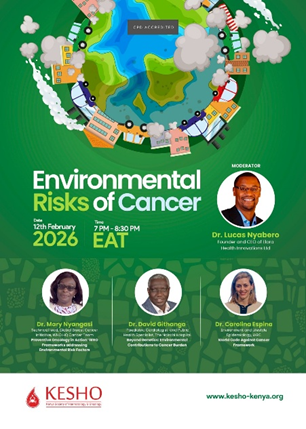
Speakers: Dr. Mary Nyangasi, Dr. David Githanga, Dr. Carolina Espina
Date: 12 February 2026
Highlights
This session examined cancer risk through an environmental and public health lens, highlighting the extent to which cancer burden is shaped by modifiable exposures rather than biology alone. A central theme was the recognition that cancer is not only a clinical or genetic condition, but also a social and environmental disease, with a substantial proportion of cases linked to preventable risk factors. Global evidence suggests that up to 40% of cancers are attributable to modified exposures, including environmental and occupational risks. Dr. Githanga outlined the biological mechanisms through which environmental exposures drive carcinogenesis, including DNA damage, chronic inflammation, epigenetic dysregulation and impaired immune surveillance. These pathways act cumulatively over time, often with long latency periods between exposure and disease manifestation.
Real-world examples such as air pollution, aflatoxin exposure and oncogenic infections illustrate how environmental context directly shapes cancer patterns, particularly in low- and middle-income settings where exposure levels are higher and regulatory systems less robust. Building on this, Dr. Nyangasi emphasized that a significant proportion of cancer burden is preventable, with WHO frameworks highlighting the importance of population-level interventions targeting modifiable risk factors, including environmental regulation, vaccination and lifestyle-related risks.
Dr. Espina introduced the World Code Against Cancer framework, which translates complex scientific evidence into clear, actionable recommendations for individuals, health systems and policymakers. The framework underscores the importance of moving beyond individual behavior change towards coordinated, multi-sectoral prevention strategies. Across the session, a consistent message emerged: meaningful reductions in cancer burden will depend on shifting upstream towards prevention, regulation and system-level action
Key Takeaways
- A substantial proportion of cancers are linked to modifiable environmental and behavioral exposures.
- Environmental carcinogenesis occurs through multi-pathway biological mechanisms over time.
- Exposure to risk is uneven and shaped by social and economic conditions.
- Population-level interventions have greater impact than individual behavior change alone.
- Effective cancer control requires alignment between clinical practice, public health and policy.