
- This event has passed.
Bladder Cancer Care
Event Navigation
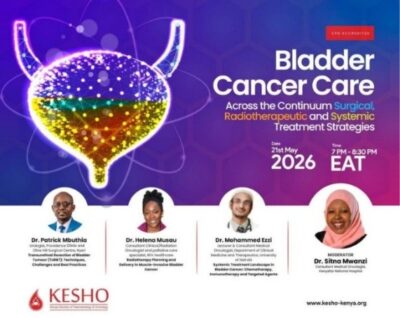
SPEAKERS: Dr. Patrick Mbuthia, Dr. Helena Musau, Dr Mohammed Ezzi
Date: 21st May 2026
Moderator: Dr. Sitna Mwanzi
This session examined bladder cancer through a multidisciplinary lens, bringing together surgical, radiotherapeutic and systemic treatment perspectives across the continuum of care.
A central theme was the need for accurate staging and risk-adapted management. Dr. Patrick Mbuthia discussed the role of transurethral resection of bladder tumour (TURBT) in diagnosis, staging and treatment, particularly for non-muscle invasive disease. The importance of complete resection, adequate detrusor muscle in the specimen, careful imaging and attention to complications was emphasized as central to subsequent treatment decisions.
Dr. Helena Musau highlighted the evolving role of radiotherapy in bladder preservation, especially through tri-modality therapy combining maximal TURBT, concurrent chemoradiation and structured response assessment. The discussion also addressed patient selection, surveillance, salvage options, palliative radiotherapy for symptoms, and the value of newer radiotherapy techniques in reducing toxicity while preserving quality of life.
Dr. Mohammed Ezzi reviewed systemic treatment across non-muscle invasive, muscle invasive and metastatic bladder cancer. He outlined the role of intravesical therapy, BCG, cisplatin eligibility, immunotherapy, maintenance strategies and emerging options such as antibody-drug conjugates and targeted agents, while noting that cost and availability continue to shape real-world treatment in Kenya.
Across the session, a consistent message emerged: improving bladder cancer outcomes requires timely diagnosis, high-quality TURBT, multidisciplinary decision-making and treatment pathways that reflect both evidence and local access reality.
Key Takeaways
- Bladder cancer management depends on accurate staging and distinction between non-muscle invasive and muscle invasive disease.
- High-quality TURBT with adequate muscle sampling is central to diagnosis and treatment planning.
- Trimodality therapy offers bladder preservation for carefully selected patients.
- Systemic therapy is rapidly evolving with immunotherapy, maintenance approaches and antibody-drug conjugates.
- Local data are needed to address African patterns of disease, including schistosomiasis-associated squamous cell carcinoma.