
- This event has passed.
Updates in Myeloma Management
Event Navigation
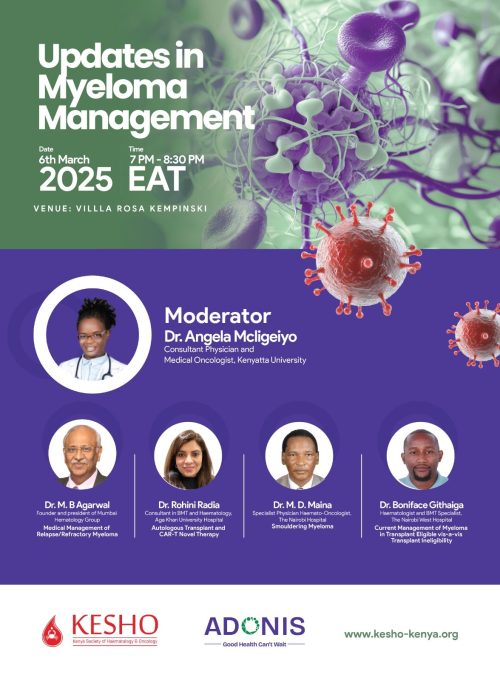
Moderator: Dr Angela Mcligieyo
Speakers & Topics:
- Dr M. B. Agarwal: Front‑line Therapy Trends
- Dr Rohini Radia: Transplant‑Eligible vs Ineligible Patients
- Dr M. D. Maina: Evidence‑Based Maintenance
- Dr Boniface Githae: Contemporary Relapse Strategies
Dr. Maina addressed Smoldering Multiple Myeloma (SMM), emphasizing risk stratification to predict progression to active myeloma. The 2/20/20 IMWG model (based on FLC ratio and bone marrow plasma cell %), and the Spanish model using immunoparesis and plasma cell phenotyping, were presented. Patients with ≥2 risk factors have a 50% chance of progression within 2 years. Ongoing efforts to integrate clinical and genomic risk markers aim to guide early therapeutic interventions.
Dr. Radia emphasized that autologous stem cell transplant (ASCT) remains the standard of care for transplant-eligible patients after induction chemotherapy. Key findings from major trials (IFM2009, EMN02/H095) showed that ASCT improves progression-free survival (PFS) but does not significantly impact overall survival (OS). Post-ASCT maintenance therapy with lenalidomide improves PFS across all cytogenetic risk groups. CAR-T cell therapy and bispecific antibodies like Teclistamab and Elranatamab show promise in relapsed/refractory multiple myeloma (RRMM), offering new options with high response rates, albeit with logistical and toxicity concerns. Kenyan real-world data shows promising survival outcomes with ASCT.
Dr. Githaiga presented practical approaches to diagnosis, transplant eligibility, and treatment selection. Diagnostic workups include comprehensive labs and bone marrow studies. For transplant-eligible patients, quadruplet regimens like Dara-VRd followed by ASCT and lenalidomide maintenance are preferred. In high-risk cases, bortezomib-based maintenance is advised. In non-transplant candidates, extended triplet regimens followed by maintenance were recommended. He also highlighted Kenyan drug cost considerations and the importance of supportive care with antivirals, antibiotics, and bone-targeting agents.