An Adapted Early Warning Signs and Symptoms (EWSS) Intervention to Improve Early Recognition and Referral of Childhood Cancers in Kenya
An Adapted Early Warning Signs and Symptoms (EWSS) Intervention to Improve Early Recognition and Referral of Childhood Cancers in Kenya
A structured implementation programme across seven Kenyan counties is strengthening recognition, referral, awareness and data systems for childhood cancer.
Authors: Githanga J, Nzamu I, Ndungu M, Chelva M, Pondy A, Mbah G, Fongang L, Ward N, Martiniuk A, Barwick M, Gupta S, Denburg A
Local Implementation Team meeting held on 4 December 2024 during the exploration phase of the EWSS implementation
Background
In Kenya, approximately 3,000 paediatric cancer cases are diagnosed annually, with survival rates of 19–30% compared with 80% in high-income settings. Delayed diagnosis and referral are important contributors to this disparity, driven by limited awareness of childhood cancer among healthcare workers and caregivers, difficulty recognising warning signs, and gaps in referral pathways contributing to delays in accessing specialised care.
The University of Nairobi, Faculty of Health Sciences, in partnership with The Hospital for Sick Children (SickKids), Toronto, is implementing an adapted Early Warning Signs and Symptoms (EWSS) intervention to improve early recognition and referral of childhood cancers in Kenya. The study seeks to generate evidence on the feasibility, clinical effectiveness, implementation processes and costs of integrating EWSS into routine health systems across seven counties: Embu, Nyeri, Murang’a, Garissa, Machakos, Meru and Nairobi.
The EWSS Approach
The EWSS intervention builds on the Saint Siluan early warning signs campaign developed in South Africa and subsequently adapted in Ghana. The original campaign sought to address three critical barriers to childhood cancer diagnosis: limited awareness that cancer can occur in children, inadequate knowledge of symptoms that may indicate cancer, and the absence of clear referral pathways for children with suspected cancer. Evidence from South Africa showed that the Saint Siluan campaign was associated with increased referrals to a specialist centre, highlighting the potential value of structured early warning sign education, although sustained awareness efforts were needed.
| S | Seek medical help: Persistent or concerning symptoms should prompt early medical assessment. |
| I | Eye symptoms: Including a white spot in the eye or a bulging eye. |
| L | Lumps: Unexplained lumps or swellings, including those involving the abdomen, head and neck, limbs or glands. |
| U | Unexplained symptoms: Including prolonged fever, unexplained weight loss, bleeding, bruising or pallor. |
| A | Aching: Persistent bone, joint or back pain or unexplained fractures. |
| N | Neurological signs: Including persistent or prolonged headaches, changes in gait, balance or speech, or other neurological abnormalities. |
The adapted Kenyan intervention comprises six core components: the Saint Siluan symptom list; tiered healthcare worker training; awareness materials; strengthened referral systems; enhanced data capture; and county-level champions to support implementation and sustainability.
Implementing EWSS Across Seven Kenyan Counties
EWSS implementation was guided by The Implementation Roadmap (TIR) (Barwick, 2023), a structured tool designed to support implementation planning in real-world health service settings.
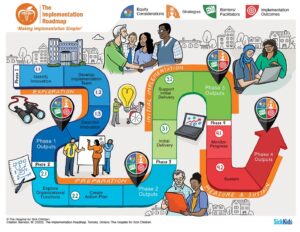
The Implementation Roadmap used to guide EWSS implementation planning.
Phase 1: Exploration involved reviewing the EWSS core components, conducting a needs assessment and identifying potential barriers and facilitators to implementation.
Phase 2: Preparation focused on ensuring that the intervention components and action items were in place, with Operations Implementation Teams and research teams co-developing context-specific EWSS implementation plans.
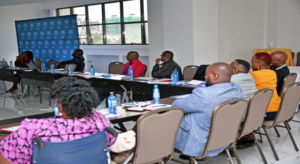
Operations Implementation Teams and research teams co-developing a context-specific EWSS implementation plan.
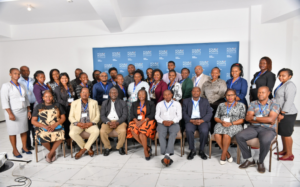 OIT members from Embu, Nyeri, Murang’a and Nairobi counties. |
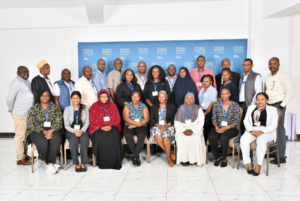 OIT members from Meru, Machakos and Garissa counties. . |
Phase 3: Initial Implementation. Paediatric oncologists conducted a three-day training-of-trainers programme from 4 to 6 August 2025. Trainers subsequently cascaded the nine-module EWSS programme to fellow healthcare workers across participating counties. Implementation activities also included strengthening referral pathways, disseminating awareness materials and establishing retrospective and prospective childhood cancer data collection using REDCap.
Principal Investigator Prof Githanga, together with three other paediatric oncologists, trained 25 healthcare workers.
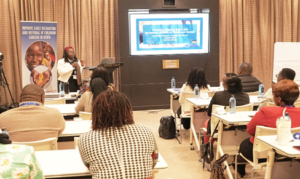 Principal Investigator Prof Githanga, together with three other paediatric oncologists, trained 25 healthcare workers. |
.
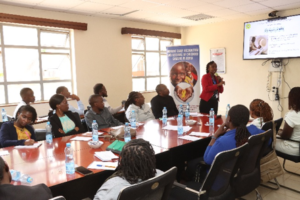 Dr Joyce Kalekye, paediatrician and EWSS trainer, training colleagues in Machakos County. |
EWSS Results
| 7
Counties |
25
Trainers |
230
HCWs trained |
967
Records |
52
EWSS referrals |
The EWSS programme demonstrated the feasibility of establishing a structured approach to early recognition and referral for childhood cancer across seven counties. Following the three-day training-of-trainers programme, 25 trainers cascaded the nine-module programme to 230 healthcare workers, including 58 medical officers, 159 clinical officers and 13 healthcare workers from other cadres. The dissemination training is still ongoing.
Implementation monitoring included pre- and post-training assessments, participant satisfaction surveys and other tools to evaluate training delivery and implementation. To raise awareness of childhood cancer warning signs, 750 flyers and 510 posters were distributed across participating settings.
The programme has also begun strengthening the link between recognition and referral. As at 14 September 2026, 967 retrospective and prospective childhood cancer records, including 52 EWSS referrals, had been documented. REDCap-based data analysis is ongoing to assess clinical effectiveness and to better understand patterns of recognition and referral. These early results demonstrate that EWSS can be operationalised through existing county health structures while creating mechanisms for training, referral, awareness and data collection.
From Implementation to Sustainability
Phase 4: Measurement and Sustainment. The programme is currently focused on integrating EWSS into national and county health systems and supporting its continued use beyond the research implementation period. Key strategies include incorporating EWSS into continuing medical education, conducting webinars, institutionalising referral pathways, maintaining county-level data systems and integrating EWSS into routine supervisory visits.
Conclusion
The EWSS programme was successfully implemented using a structured, science-based approach, establishing county-level training, referral, awareness, champions and data systems to support earlier recognition and referral of childhood cancer. Ongoing evaluation will assess its effectiveness and sustainability.
Affiliations
University of Nairobi, Nairobi, Kenya; Kenyatta National Hospital, Nairobi, Kenya; The Hospital for Sick Children, Toronto, Canada; Mother and Child Center of Chantal Biya Foundation, Yaoundé, Cameroon; World Child Cancer, Surrey, United Kingdom; EWSS, Bamenda, Cameroon; University of Sydney, Sydney, Australia; The Hospital for Sick Children, Hematology/Oncology, Toronto, Canada.
Reference
Noh H, Chelva MP, Mbah Afungchwi G, Pondy A, Githanga J, Landis F, King’e M, Martiniuk AL, Ward N, Barwick M, Gupta S, Denburg A. Feasibility and clinical and implementation effectiveness of an adapted early warning signs and symptoms intervention for the early detection of childhood cancer in Cameroon and Kenya: protocol for a quasi-experimental, hybrid type 2 implementation effectiveness study. BMJ Open. 2025 Sep 2;15(9):e094502. doi: 10.1136/bmjopen-2024-094502. PMID: 40897493; PMCID: PMC12406926.

Leave a comment