
- This event has passed.
Childhood Cancer Diagnosis
Event Navigation
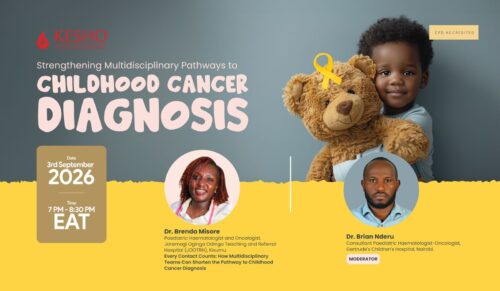
EVERY CONTACT COUNTS: STRENGTHENING MULTIDISCIPLINARY PATHWAYS TO CHILDHOOD CANCER DIAGNOSIS
- Moderator: Dr Brian Nderu
- Speaker: Dr Robert Kimutai
- Date: 3 September 2026
This session focused on diagnostic delay in childhood cancer as a systems and pathway challenge rather than simply a problem of missed symptoms.
Dr Robert Kimutai discussed the different points at which delays can occur, including delay in seeking care, reaching appropriate services and receiving the right diagnosis and referral. He emphasized the importance of recognising persistent, progressive or unexplained symptoms and strengthening the response at the first point of contact.
A major theme was the need for coordinated referral pathways with clear clinical ownership. Effective childhood cancer pathways depend on communication between primary care, referral facilities and specialist services, with closed-loop referral systems that reduce the risk of children being lost between levels of care.
The discussion also broadened the concept of multidisciplinary care beyond specialist teams. Frontline clinicians, laboratory teams, nurses, referral coordinators and other health workers all have a role in recognising warning signs and moving children efficiently through the diagnostic pathway.
The session highlighted the importance of strengthening peripheral diagnostic capacity, particularly basic laboratory services, while improving referral processes for children who require specialist investigation and care.
Across the discussion, the central message was clear: earlier diagnosis depends not only on awareness, but on health systems that can recognise, refer, investigate and follow up children consistently.
Key Takeaways
- Childhood cancer diagnostic delay is often a pathway problem, not only a recognition problem.
- Persistent, progressive or unexplained symptoms should prompt further assessment.
- Clear referral ownership and closed-loop communication can reduce delays.
- Multidisciplinary childhood cancer pathways begin at the first point of contact.
- Strengthening peripheral diagnostic capacity and measuring referral performance are important for improving early diagnosis.