
- This event has passed.
Multidisciplinary Management of Testicular Cancer
Event Navigation
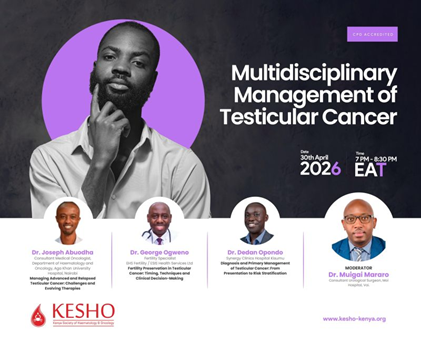
- Moderator: Dr. Muigai Mararo
- Speakers: Dr. Dedan Opondo, Dr. Joseph Abuodha, Dr. George Ogweno
- Date: 30 April 2026
This session marked Testicular Cancer Awareness Month with a multidisciplinary discussion on diagnosis, primary management, advanced disease, relapse and fertility preservation.
A central theme was that testicular cancer is highly curable when investigated and managed promptly, but cure depends on disciplined staging and risk stratification. Dr. Dedan Opondo outlined the importance of early clinical recognition, scrotal ultrasound, serum tumour markers, cross-sectional imaging and radical inguinal orchiectomy. The session reinforced that suspected testicular cancer should not be delayed, particularly because some germ cell tumours can progress rapidly.
Staging was presented as a practical foundation for management. Tumour markers such as AFP, beta-HCG and LDH, together with nodal imaging and histology, help distinguish seminomatous from non-seminomatous disease and guide decisions on surveillance, chemotherapy, radiotherapy and retroperitoneal lymph node dissection. The discussion also highlighted the technical and fertility-related implications of retroperitoneal surgery in young men.
Dr. Joseph Abuodha reviewed advanced and relapsed disease, emphasising that treatment remains strongly anchored in surgery, cisplatin-based chemotherapy, radiotherapy and surveillance rather than newer targeted or immunotherapy approaches. Across stages, the emphasis was on matching intensity to risk—avoiding both overtreatment and undertreatment—while recognising that even metastatic disease can remain curable with the right treatment strategy.
Dr. George Ogweno brought fertility preservation into the core of cancer care. He underscored the need for early oncofertility counselling, sperm banking where possible before treatment, and stronger collaboration between oncology, urology, fertility specialists, laboratories and counsellors. The discussion also reflected Kenya’s service realities, including limited fertility centres and the need for clearer pathways, consent and long-term storage planning.
Across the session, a consistent message emerged: testicular cancer care must protect both survival and survivorship.
Key Takeaways
- Early recognition, tumour markers, imaging and radical inguinal orchiectomy are central to initial management.
- Risk stratification using histology, TNM stage and post-operative markers guides treatment intensity.
- Seminoma and non-seminoma pathways differ and should not be managed interchangeably.
- Cisplatin-based chemotherapy remains central in advanced and relapsed disease.
- Surveillance is appropriate only when reliable follow-up is possible.
- Fertility counselling and sperm preservation should be discussed as early as possible.