
- This event has passed.
Ovarian Cancer in Focus
Event Navigation
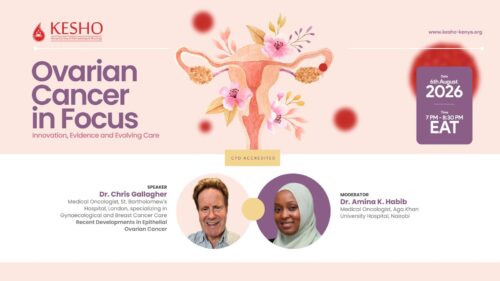
Ovarian Cancer in Focus: Innovation, Care and Evolving Care
- Moderator: Dr. Amina K. Habib
- Speaker: Dr. Chris Gallagher
- Date: 6 August 2026
Summary
This session examined recent developments in epithelial ovarian cancer, from the continuing challenge of earlier diagnosis to surgical decision-making, molecular stratification, maintenance therapy and emerging options for recurrent and platinum-resistant disease.
A central theme was the move towards increasingly biomarker-informed care. Dr. Chris Gallagher highlighted how BRCA1/2 mutations and homologous recombination deficiency are shaping treatment selection, particularly PARP inhibitor maintenance after response to platinum-based chemotherapy. The discussion reinforced that these therapies offer the greatest value when matched to tumour biology rather than applied broadly.
The session also explored the challenge of finding ovarian cancer earlier. Emerging approaches using circulating DNA fragments may improve future detection, but the evidence remains preliminary and requires wider validation. Surgical treatment was similarly framed around careful patient selection: the choice between upfront cytoreductive surgery and neoadjuvant chemotherapy should reflect disease extent, patient fitness and the likelihood of achieving complete resection.
For recurrent and difficult-to-treat disease, the discussion highlighted newer approaches including folate receptor alpha-targeted antibody-drug conjugates in platinum-resistant ovarian cancer and molecularly targeted strategies for low-grade serous disease. These developments are expanding treatment possibilities, although the role of immunotherapy remains less clearly established.
The discussion brought these advances into the African context, where access to BRCA and HRD testing, targeted therapies and newer medicines remains uneven. Molecular testing is most meaningful when it can inform an accessible treatment pathway. In recurrent disease especially, expected benefit must be weighed against toxicity, quality of life, patient fitness and financial burden.
Across the session, a consistent message emerged: ovarian cancer care is becoming increasingly defined by tumour biology, but improved outcomes still depend on appropriate surgery, access to molecular testing, careful patient selection and treatment pathways that reflect both evidence and real-world access.
Key Takeaways
- Earlier detection remains a major unmet need, with emerging circulating DNA approaches still requiring further validation.
- BRCA and homologous recombination status are increasingly important in guiding treatment selection.
- Surgical sequencing should be individualised, with complete cytoreduction remaining an important treatment objective.
- PARP inhibitors and newer targeted therapies are expanding options for selected patients, including those with recurrent or platinum-resistant disease.
- In African settings, clinical benefit, treatment access, affordability and quality of life must remain central to decision-making.
Continue the learning
This summary captures only part of the discussion. To request the full session recording, contact the KESHO Secretariat. KESHO members can access CME recordings and revisit expert-led sessions across haematology and oncology throughout the year. Join KESHO to access the full CME learning library.